
The land
The estates
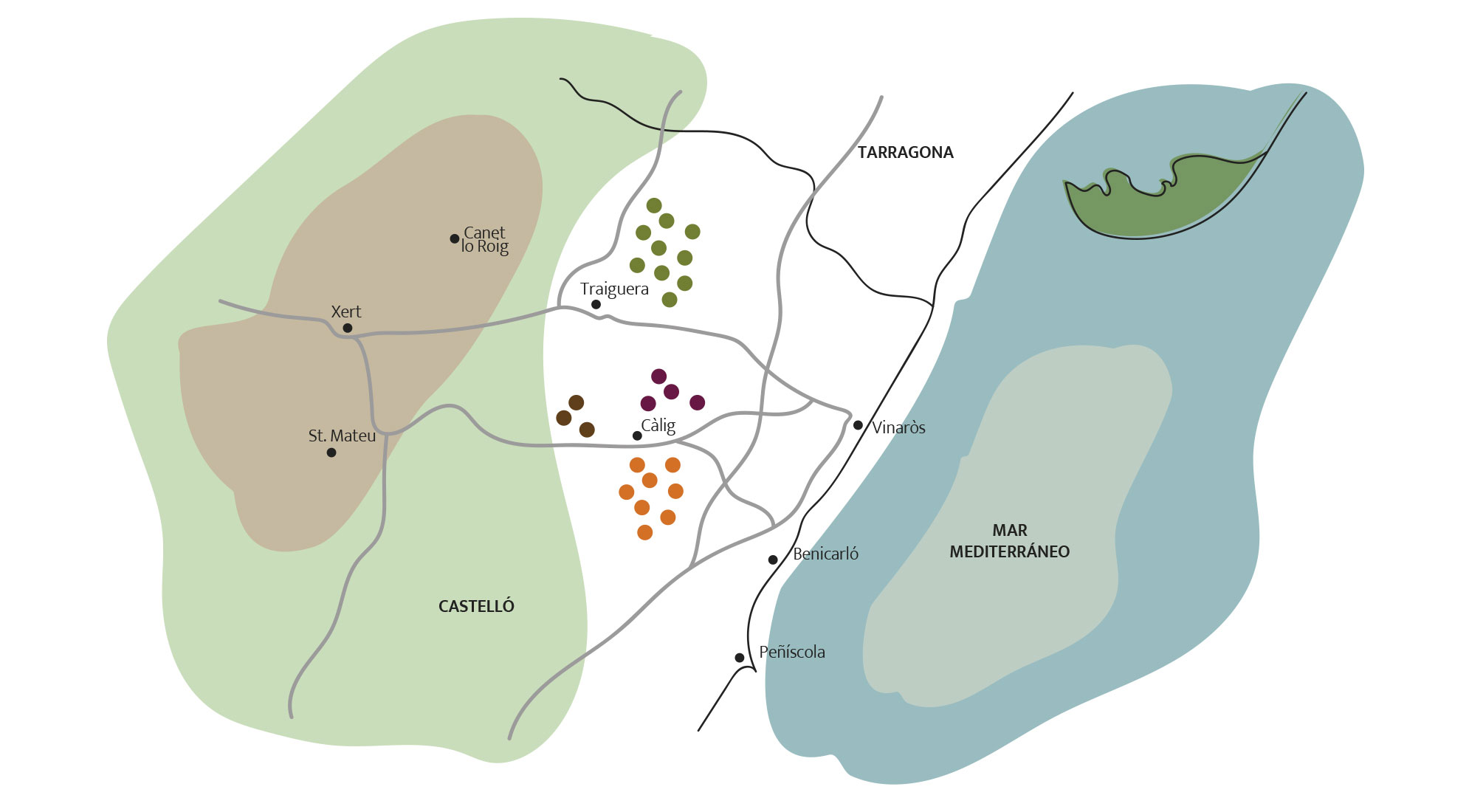
Cervera · Càlig · Traiguera
Benicarló · Vinaròs
Where we are
Five municipalities,
one land
The estates of Pobill Ecològics spread across the municipalities of Cervera, Càlig, Traiguera, Benicarló and Vinaròs. We are talking about some 200 jornals of Càlig land, which come to roughly 67 hectares, cultivated and in production. Some of this land comes from our family and some is rented.
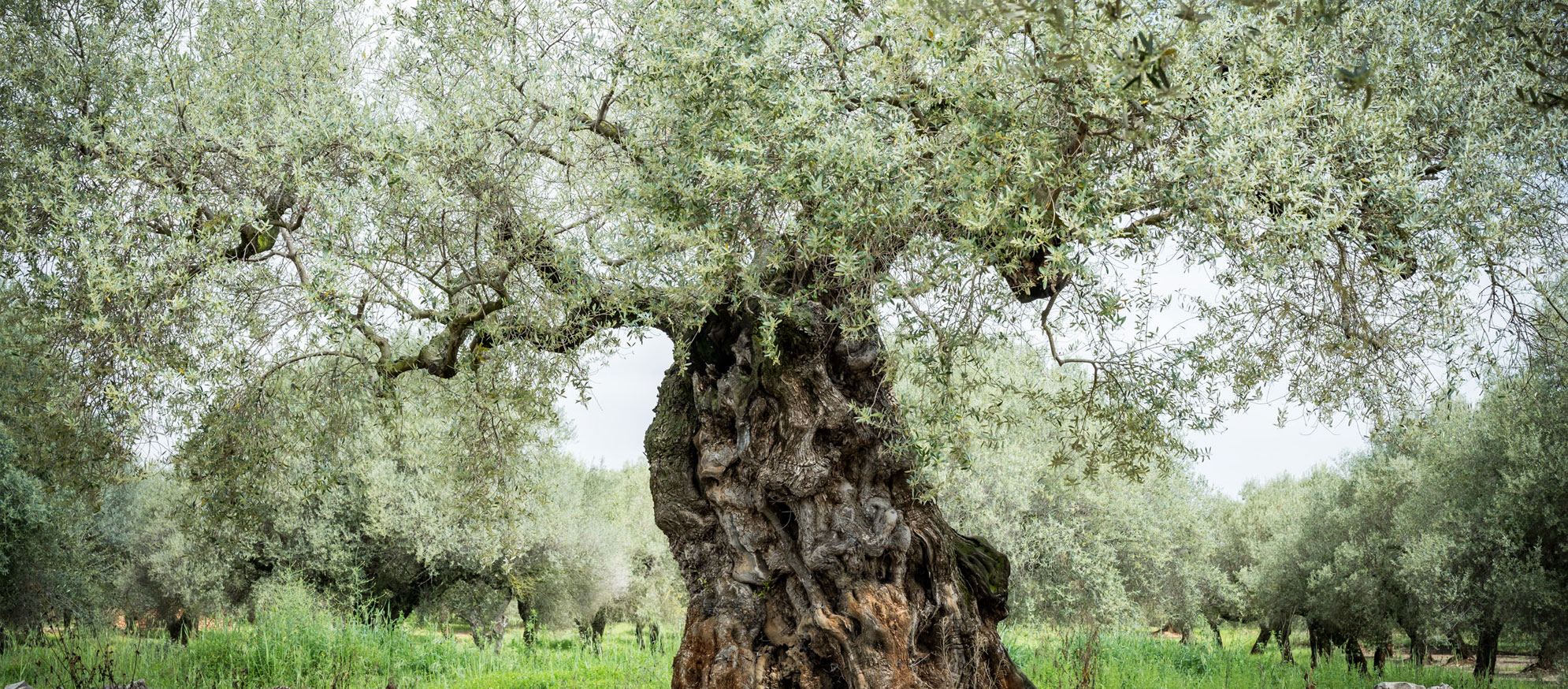
We have about 5,000 mandarin trees, 1,000 orange trees, 4,000 olive trees (15 of them millennial; varieties include Farga, Sevillenca, Villalonga, Canetera, “de bec de mussol” (owl’s beak), Arbequina, “Baix Fulla”, Figueretes and Morruda), 150 almond trees and about 15 hectares of carob trees.
Other estates are in a recovery period, which means we are clearing them of weeds (to defend and recover the territory, the landscape, etc.).
The scale
67
hectares
Cultivated and in production.
4,000
olive trees
15 millennial, Farga, Sevillenca, Villalonga, Canetera, “de bec de mussol” (owl’s beak), Arbequina, Baix Fulla, Figueretes and Morruda.
5,000
mandarin trees
1,000
orange trees
150
almond trees
15
hectares of carob trees
5
municipalities
Cervera, Càlig, Traiguera, Benicarló and Vinaròs.
15
millennial olive trees
Among the 4,000 olive trees of the farm.
Approximate figures for the farm.
The crops
Do you want to know which are the most representative estates, the ones that are part of the culture of the Pobill Ecològics family?
Orange trees
Olive groves
Vineyards
Carob trees
The Càlig
family
Eight emblematic estates
and many more
El Mas i l’Illa
David Taus’ father bought it from José Aragó, a neighbour from Càlig, who had bought it in 1955 from the Argentine heiresses of an exiled man from Càlig.
El mas d’en Rei
David’s father’s family took refuge here from the bombings and from the arrival of the fascists in Càlig. It had three small houses, one of them exclusively for the mules.
Lo Muró
A very special estate: it is where David Taus’ maternal grandparents met. As he tells it, his grandfather came to Càlig to help with the olive harvest, saw his future grandmother and “love was born”.
La Llecuna
This is where the family used to grow most of the wheat used to make bread.
Les Foies
Today it is a very productive estate. It used to be vineyards. It comes from David’s paternal grandfather, who bought it from José Comes.
Illa de Garrofers
It lies in the municipality of Cervera, next to the road to Sant Jordi. David’s grandfather Ramon showed him where one of his mules, which died while working, was buried. Today it is an area of organic carob trees.
El Poubonet
Long ago it was full of olive trees, then vines and almond trees. Today it grows organic Arbequina olives. During the war it was part of the Republican airfield.
El Bovalar
One of our most emblematic estates and the biggest, full of mandarin trees and Arbequina olive trees. The result of three purchases by the family.
Other estates in Càlig
These are the most emblematic ones, but there are many others such as La Bassa, La Cova, Poulabassa, Tossa, Los Colls, El Masset, Lo Riu, La Fontanella (full of fruit trees), El Placerveres, Els Pocanets and Les Perdigones, Lo camí Sant Jordi, La Somà or Cometa (where hanging tomatoes were grown)… and many more! So many that it would never end. Everything, after all, has a story.
The Traiguera
family
Seven emblematic estates
and those that accompany them
Alvaga
As its name suggests, “obaga” in the northern hemisphere is the north side of a mountain, the shady side. That makes this a very cool estate that is always damp, and the trees feel it and are more vigorous. Terraced land with a waterwheel (sènia). It is the result of four purchases, some before the war, some in the 1950s and the latest in the second decade of this century. It is made up mainly of olive trees.
Freginal
This olive estate has been family property for more than five generations. The olive grove is Villalonga and it sits at the gates of the town of Traiguera.
Collemet gran
A family purchase in the 1960s. It used to be almond trees; today it is made up of 150 Morruda olive trees.
Loma
This estate is made up of centennial Farga olive trees, part inherited by the family and part bought from other Argentine exiles. It is the main source of our organic Farga oil, and it also has about 15 organic carob trees.
El Camp
A very flat estate made up of olive trees of many varieties, although it also has a few carob trees.
La Cova
The estate farthest from the town of Traiguera, also with olive and carob trees. It comes from multiple partitions among heirs over at least five generations, which is corroborated by the fact that most of the owners carried the surname “Belsa”. A very productive estate very close to the municipality of Canet, on the other side of the Cervol river.
Los Vilarrets
An estate of Morruda grafts that was transformed 15 years ago. It comes from the paternal family of David Taus’ wife. It is also very close to the Cervol river.
Other estates in Traiguera
Other estates such as Regaxol, with organic almond trees, Collemenet Menut and Astolls, are also part of the Pobill land holdings in Traiguera.
Under recovery
Little by little, these plots are being converted from conventional agriculture to certified organic agriculture.
It is only a matter of time.